

News

Nobody Is Going Back to Paper
A tech finishes an inspection on a tablet and the result is on the record before he leaves the lot. Forty feet away, the last tightness test is a fax printout in a binder nobody can find. Same site, same Tuesday. Three shifts are running through this industry right now, none of them is reversing, and the cost of waiting is not the one most operators expect.

The Best Number in EPA’s FY2026 Report Has a Blind Spot
Operator training was the brightest number in EPA’s Mid-Year FY2026 report, climbing to 89.7%. But that figure counts only Class A and B operators — not the high-turnover Class C employees working the counter. Here’s the blind spot inside the report’s best number, and how to close it.
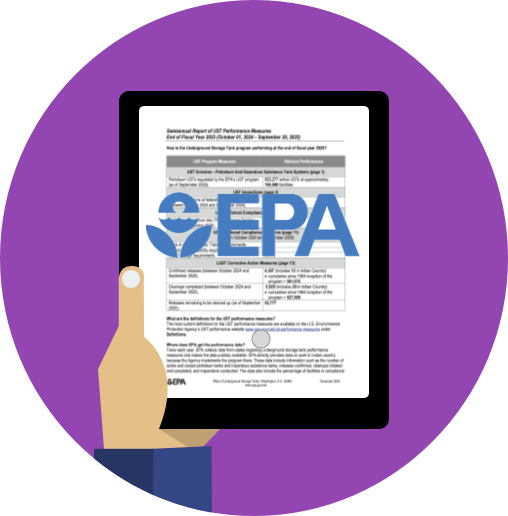
EPA’s Mid-Year FY2026 UST Performance Measures Are Out — Here’s What Moved Since FY2025
EPA’s Mid-Year FY2026 UST report is the first one we can set directly beside FY2025 — and the comparison is revealing. The national Technical Compliance Rate slipped two points to 60.9%, even as operator training rose to 89.7% and the cleanup backlog fell by 918. But the real story is the spread between states, from Missouri’s 96% to Indiana’s 19%. Use the interactive tool to pin the states you operate in and line them up side by side across every measure EPA tracks.

As Fuel Retail Consolidates, Compliance Doesn't Get Simpler — It Gets Harder
Fuel retail consolidation is reshaping the industry — but every acquisition brings a new wave of underground storage tank compliance obligations. Explore why growing your portfolio doesn’t simplify compliance, and how multi-site operators can stay ahead of state-by-state UST regulations at scale.

Insurance Underwriters Are Looking at UST Compliance More Closely Than Ever
Insurance carriers are taking a closer look at UST compliance before renewing environmental and liability policies. From documented inspections to verified operator training, underwriters are evaluating whether systems are actively managed—not just installed. Here’s what operators need to know to protect both compliance standing and insurability.
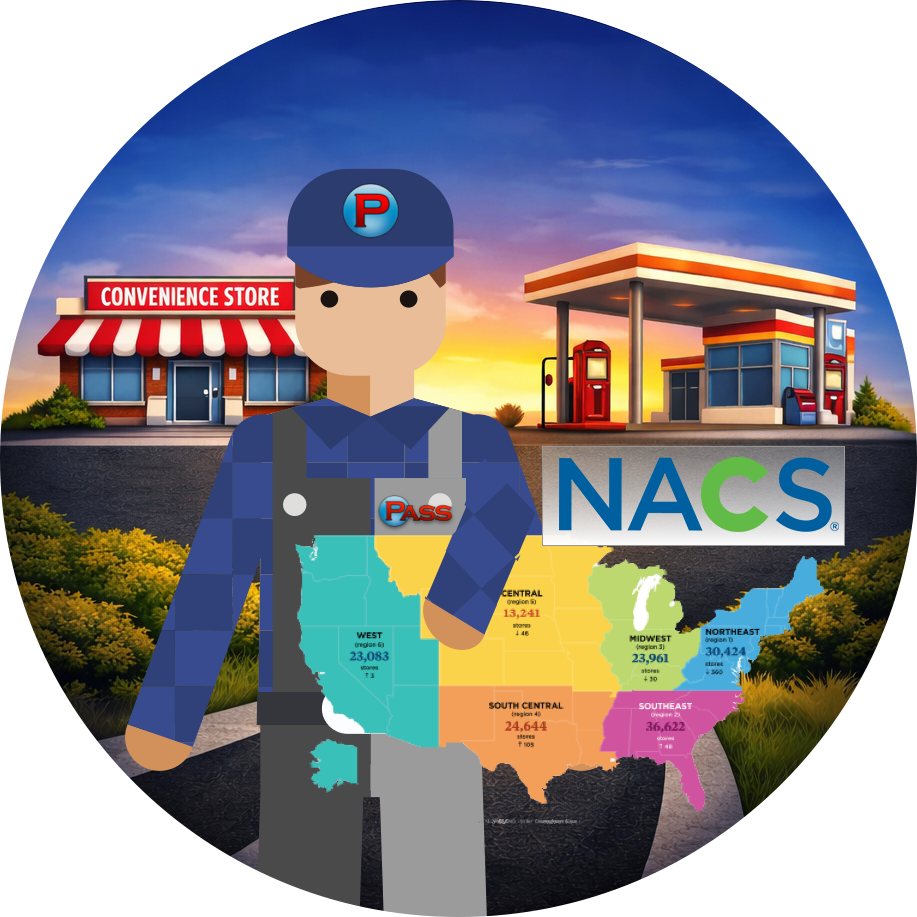
Convenience Stores Aren’t Disappearing — They’re Consolidating
Convenience store count declined slightly in 2026, but fuel-selling locations reached an eight-year high. The footprint may be stable, but consolidation and rising operational complexity continue reshaping the industry.

Schedule III Headlines vs. the Real Retail Bombshell
Schedule III headlines may sound like a win for cannabis reform—but for mainstream retailers, they’re missing the real story. While marijuana remains off-limits, hemp-derived THC products are squarely in regulators’ crosshairs, creating compliance risks that convenience stores can’t afford to ignore. The real retail bombshell isn’t what’s changing federally—it’s what’s coming next at the state level.

Why “Good Enough” Compliance Is No Longer Enough
Good enough” compliance may check a box—but it no longer protects organizations from real-world risk. As regulations evolve and operations become more complex, relying on fragmented processes, institutional memory, and last-minute documentation leaves critical gaps. True compliance today requires a continuous, system-driven approach that delivers visibility, accountability, and confidence before regulators ever arrive.
EPA’s FY2025 UST Performance Measures Are Out — Here’s the Story Behind the Tables
EPA’s FY2025 UST performance measures show where compliance is slipping nationwide. We break down what the data really says, why it matters, and where operators and regulators should be paying attention.
What California’s E15 Update Means for Retailers: A Practical Look at Compatibility, Risk, and Best Practices
California’s new authorization of E15 brings fresh compliance considerations for UST operators. This article breaks down the risks—phase separation, corrosion, and ATG anomalies—and outlines the steps retailers should take now to verify compatibility, strengthen inspections, and stay ahead of evolving state requirements.
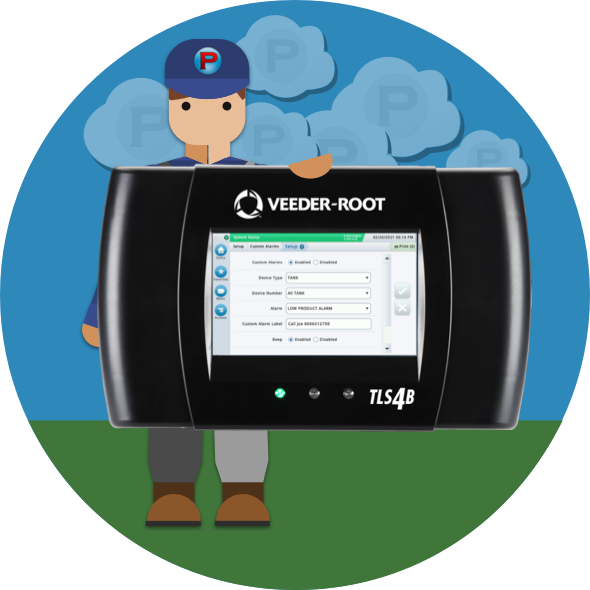
CISA Warns of Critical Veeder-Root Vulnerabilities Allowing Attackers to Execute System-Level Commands
CISA has issued an urgent advisory warning of two critical vulnerabilities affecting Veeder-Root TLS4B Automatic Tank Gauge systems—flaws that could allow attackers to execute system-level commands or disrupt fuel-monitoring operations. This article breaks down the risks, the newly released patch, and why isolating ATG systems with PASS Connect is now more important than ever.

Virginia DEQ Adopts Tiered Compliance Process for UST Inspections
The Virginia Department of Environmental Quality (DEQ) will roll out a new tiered compliance process for UST inspections beginning October 1, 2025. The change replaces the one-size-fits-all approach with responses based on the severity and context of violations, making enforcement more transparent, fair, and efficient.


Training Tops Investment Priorities for Operators in 2025
A new Convenience Store News report reveals that training and employee retention rank as the second-highest investment priority for operators in 2025. Rising costs and workforce challenges are pushing retailers to invest in people — with online training and certification tracking systems like PASS LMS becoming vital for compliance, consistency, and efficiency.

Countdown to Compliance: California’s UST Deadline – December 31, 2025
California’s single-walled UST deadline is coming fast. By December 31, 2025, non-compliant tanks must be permanently closed or risk shutdowns and steep fines. Here’s what operators need to know—and how PASS Training & Compliance can help you stay ahead.
