What Every Operator Should Know Before Closing a UST
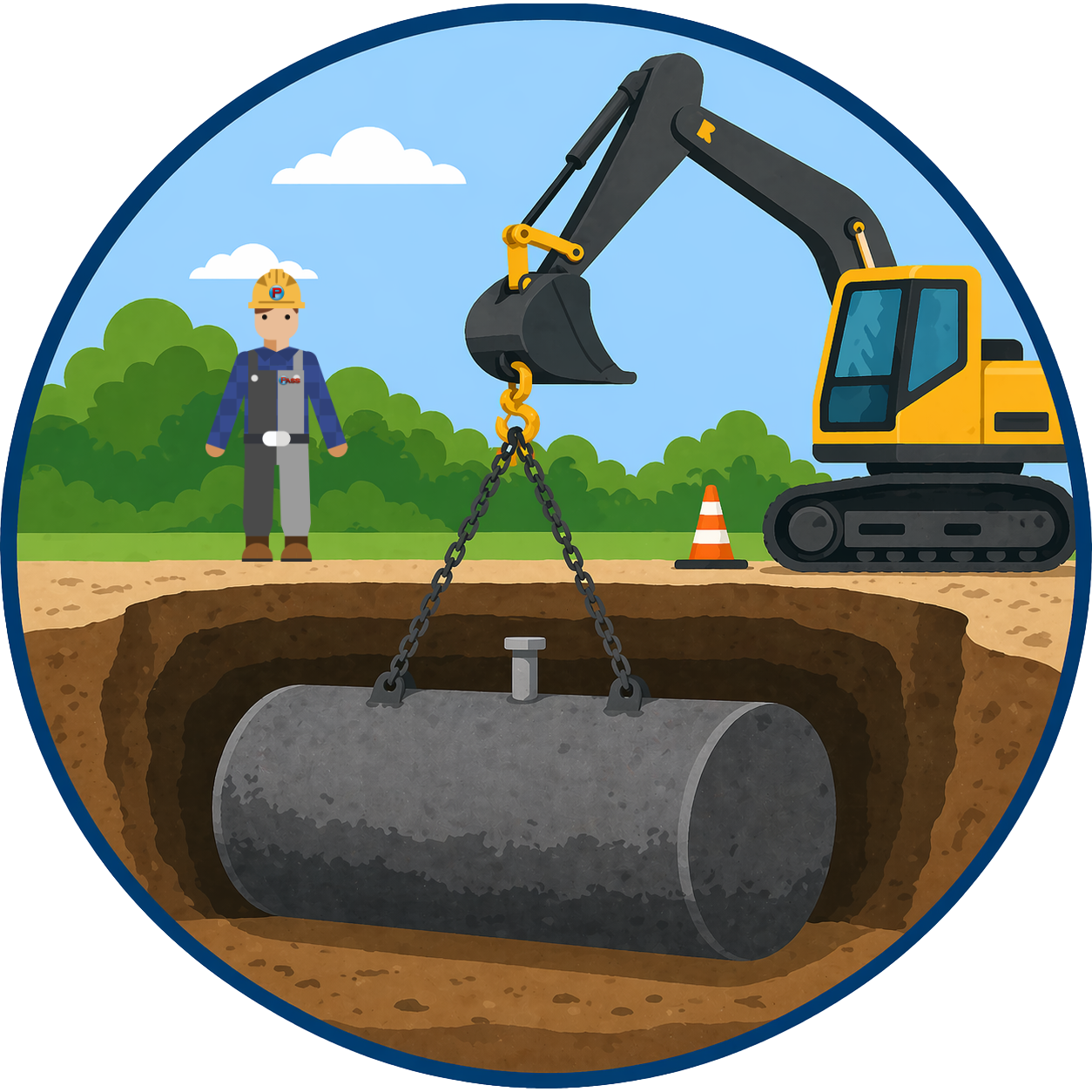
There comes a moment in the life of every underground storage tank when the pumps stop running for the last time. Sometimes the decision is forced — a failing system that can no longer meet today's compliance standards. Sometimes it's strategic, tied to a property sale, a redevelopment, or a station rebuild. And sometimes it's simply the quiet end of a long run, a tank that has done its job for two or three decades and is ready to come out of the ground.
Whatever the reason, that moment matters more than most operators realize. UST closure isn't the end of compliance. It's one of the most consequential compliance events in the entire lifecycle of a fuel system, and how it's handled can determine whether a site walks away clean or carries an environmental liability for years to come.
The Regulatory Backdrop
At the federal level, UST closure falls under 40 CFR Part 280, Subpart G. Those regulations set the minimum requirements for taking a tank out of service in a way that protects human health and the environment. But the federal framework is rarely the whole story. Most states operate their own EPA-approved UST programs, and in many cases those state requirements go further than the federal baseline. Operators who treat federal rules as the finish line, rather than the starting line, often find themselves caught off guard during inspection or during a property transaction down the road.
The right mindset is straightforward: federal regulations tell you the minimum, and your state tells you what closure actually has to look like in practice.
Removal or Closure in Place?
Federal regulations recognize two paths to permanent closure, and the choice between them is usually dictated by the site itself.
The first and most common method is closure by removal. The tank is excavated, lifted out of the ground, and hauled away. Removal gives everyone — the operator, the contractor, and the regulator — the clearest possible look at the tank and the soils that surrounded it. If something has gone wrong underground, removal is when it tends to come to light. For that reason, many regulators prefer this approach when site conditions allow.
The second method is closure in place. When a tank sits beneath a building, a roadway, or some other piece of infrastructure that can't reasonably be disturbed, removal isn't practical. In those cases, the tank is emptied, cleaned, filled with an inert material such as sand or a cementitious slurry, and permanently abandoned underground. It's worth pausing here, because there's a persistent misconception in the industry: closure in place does not reduce environmental responsibility. The same site assessment, the same reporting obligations, and the same long-term liability questions all still apply. The tank stays in the ground; the regulatory exposure does not go away with it.
How Closure Actually Unfolds
While every project has its own quirks, federal rules establish a consistent sequence of events that operators can count on.
It starts with notification. In most jurisdictions, owners and operators are required to notify the regulatory agency at least 30 days before closure begins. That window gives the agency time to review the plan and, in many states, to schedule an observer for the work itself. Skipping or shortening this step is one of the easier ways to derail a project before it begins.
Once notification is squared away, the tank has to be properly emptied and cleaned. Every gallon of product, every inch of sludge, has to come out. The system has to be cleaned thoroughly enough to eliminate vapors and residues, and any waste generated in the process has to be handled and disposed of in accordance with applicable environmental regulations. This is methodical work, and it's not the place to cut corners.
Then comes the part of closure that matters most: the site assessment. At the time of closure, the operator is required to evaluate the excavation zone for evidence of a release. In practice, that means soil samples — and where groundwater is present or shallow, water samples too. The purpose is to answer one question with as much certainty as possible: did petroleum or hazardous substances escape this system into the surrounding environment? A weak or poorly documented assessment is, in the long run, almost always more expensive than a thorough one.
What happens next depends on what the assessment reveals. If contamination is found, the closure essentially transitions into a corrective action project. The release has to be reported and addressed under applicable cleanup regulations, and the timeline for the property changes accordingly. If no contamination is found, the project still isn't quite done — the assessment itself has to be documented well enough to prove, in detail, that it was conducted properly.
That documentation becomes the closure file. Records of the closure method used, the sampling locations and procedures, the laboratory results, and any corrective actions taken all need to be retained. Federal rules require at least three years of recordkeeping, but many states require longer, and many require a formal closure report submitted to the agency. From a practical standpoint, treat closure documentation as something you may need to produce a decade from now during a property sale, because eventually, you probably will.
Temporary Closure Is a Different Animal
Not every tank that goes out of service is being closed permanently. Sometimes a station is being remodeled, sometimes a tank is idled while a business decision plays out, and sometimes ownership is in flux. These situations fall under temporary closure, and they have their own rules.
During temporary closure, certain systems — corrosion protection in particular — have to remain operational. The tank is out of service, but it isn't truly inactive in a regulatory sense. And there's a clock running: once a system has been temporarily closed for more than 12 months, additional requirements kick in unless the tank meets current upgrade standards. Permanent closure becomes the practical option for many systems that drift past that threshold.
Why Closure Is Often the Moment of Truth
Here's the uncomfortable reality of underground storage: tanks can leak slowly, in small volumes, for a long time before anyone notices. Even a system that has been well-maintained, well-monitored, and consistently in compliance can have a release that no one knew about. Closure is frequently the moment when those releases finally come to light.
That's why closure carries weight far beyond the cost of the work itself. Environmental liability that has been hiding in the soil for years can be identified for the first time during a closure assessment. Corrective action costs, in some cases, can run well past the value of the tank or even the station. Property transactions — sales, refinances, redevelopments — increasingly hinge on clean closure documentation, and a buyer's environmental consultant will look hard at how the closure was performed. And on the regulatory side, an incomplete or sloppy closure can trigger enforcement action long after the work is finished.
Where Operators Tend to Get Tripped Up
After watching enough of these projects, the same handful of mistakes keeps surfacing. Site assessments that are too narrow or too shallow to actually answer the contamination question. Sampling that's done correctly but documented poorly, leaving a paper record that won't hold up under scrutiny. Suspected contamination that gets noticed but not formally reported, which is almost always worse than reporting it in the first place. The assumption that closure in place is somehow a lighter regulatory lift than removal — it isn't. And closure files that are incomplete, missing key results, or simply lost over time as personnel and ownership change.
None of these mistakes are exotic. They're the predictable result of treating closure as a demolition project rather than a regulated environmental event.
The Bottom Line
UST closure isn't really about removing a tank, and it isn't really about filling one with slurry. It's about producing a defensible, documented record that this site was taken out of service properly, that the surrounding environment was assessed, and that whatever was found — or not found — was handled in accordance with the rules.
Done correctly, closure draws a clean line under a tank's working life and gives the operator a real endpoint. Done improperly, it leaves a thread that someone, somewhere, will eventually pull. Understanding the process, knowing where federal rules end and your state's requirements begin, and working with qualified professionals who do this work every day are what separate a closure that's truly closed from one that simply looks that way on the surface.