The Quiet Threat in Your UST: What Water Is Really Doing Down There
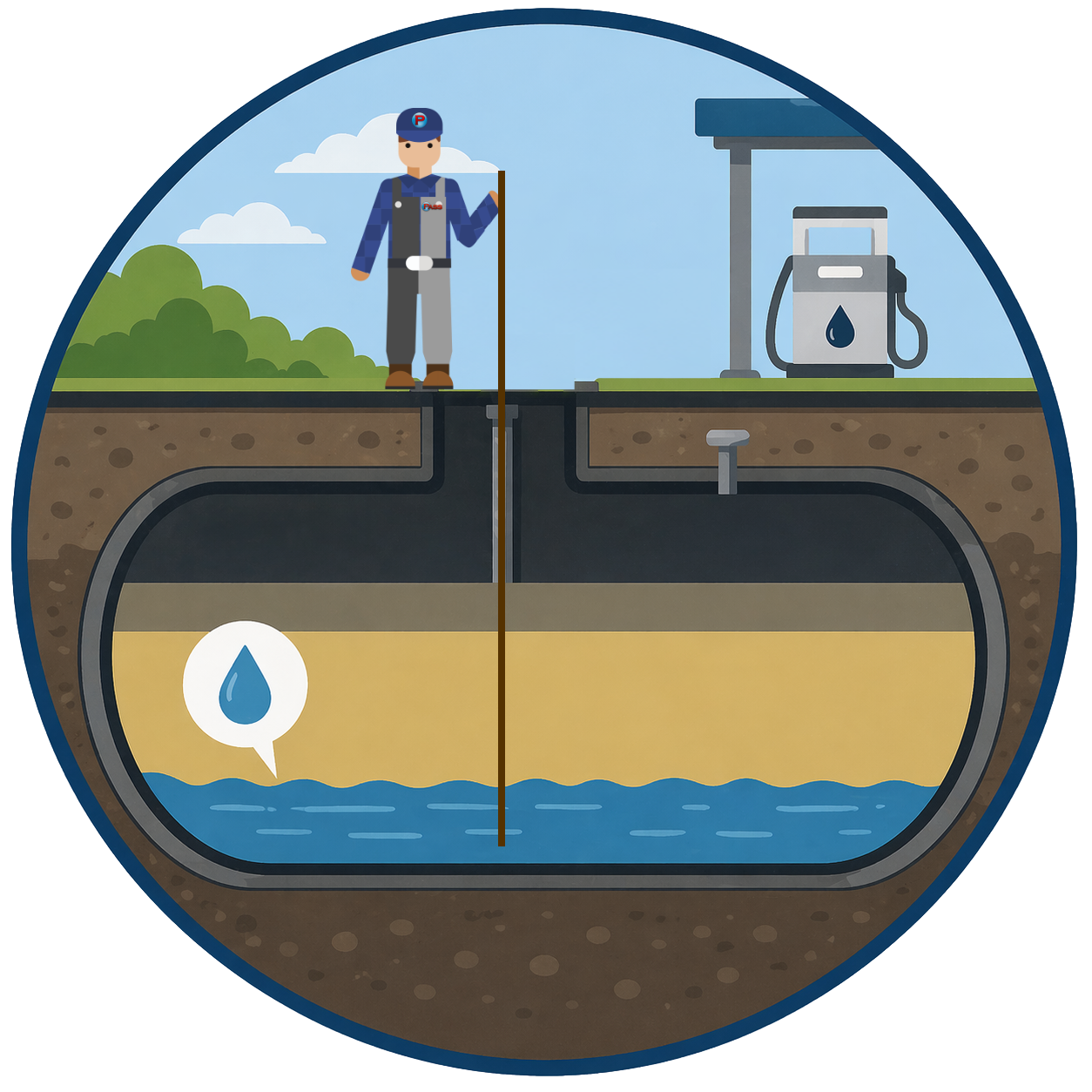
Every underground storage tank has water in it. That's not an indictment of your operation—it's physics. Temperature swings cause condensation. Deliveries occasionally bring moisture along with the fuel. A spill bucket cracks. A fill cap doesn't quite seat right after a busy weekend. Over months and years, water finds its way in, and even the best-maintained sites collect some.
The question isn't whether water is in your tank. The question is whether you know how much, where it's trending, and what you'll do about it before it becomes the problem that ruins a Tuesday afternoon.
A Small Number That Causes Big Problems
A quarter inch of water sitting at the bottom of a 10,000-gallon tank doesn't sound like much. In a sense, it isn't—the volume is small, the fuel above it looks fine, and the pumps keep running. But that quarter inch is roughly the threshold where most operators should be picking up the phone. Below that, you're monitoring. Above it, you're reacting. And reacting after the fact almost always costs more than acting early.
The reason small amounts matter is that water doesn't stay neutral in modern fuel. With E10 and other ethanol blends, water can trigger phase separation—the ethanol pulls away from the gasoline and binds with the water, creating a layer at the bottom of the tank that is, for all practical purposes, unsellable liquid. Worse, if that layer reaches the pump pickup, it goes into a customer's vehicle. From there, the conversation shifts from tank maintenance to repair claims, insurance calls, and an unhappy review on Google.
What Your ATG Is Actually Telling You
The automatic tank gauge is the single most useful tool an operator has for managing water, and it's the one most often glanced at and forgotten. Water shows up on the ATG in inches—at the bottom of the tank, beneath the fuel—and the number itself is less important than the trend behind it.
A reading that has held steady at an eighth of an inch for months is a different situation than a reading that climbed from a sixteenth to a quarter over three weeks. The first is a tank doing what tanks do. The second is telling you something has changed: a delivery brought water in, a containment area is leaking, or a seal somewhere has given up. The number on the screen is a snapshot. The pattern over time is the story.
This is one of the reasons we built PASS Harmonics the way we did. Operators don't have time to sit at the console and study weekly trends across multiple tanks at multiple sites. The platform pulls that data forward automatically, flags the trends that matter, and keeps the records you'll want if a regulator ever asks how you've been managing your system.
When You Find Water, Move Fast
If your ATG shows water creeping toward a quarter inch—or if it jumped after a recent delivery—the response is straightforward, but the timing matters.
Confirm the reading first. ATGs are reliable, but a manual stick check with water-finding paste removes any doubt and gives you a baseline you can compare against the next reading. If the level is high enough to threaten fuel quality, stop selling from that tank until the situation is resolved. Selling questionable fuel to save a few hours of revenue is the kind of decision that turns into a much larger expense.
Then call a qualified UST service provider. Water removal isn't a job for the site team—it requires the right equipment, proper disposal, and someone who understands the compliance side of what's being done. The same contractor who handles your inspections and routine maintenance is usually the right call.
And once the water is out, find out how it got in. Removing water without addressing the source means you'll be making the same call in another three months.
Staying Ahead Of It
The operators who deal with water issues least are the ones who treat the system as a system, not as a collection of tanks that occasionally need attention. They walk the spill buckets. They notice when a fill cap looks worn. They check the tank after a delivery if anything about the drop felt off. They look at their ATG data regularly enough to know what normal looks like, which is the only way to recognize when something has changed.
None of that is dramatic. It's the unglamorous work of running a fuel site well, and it's why some operators go years without a water-related incident while others fight the same problem every season.
The Bottom Line
Water in your tank is normal. Ignoring it is what gets expensive.
A few minutes a week reviewing your ATG data, a quick visual check on your containment, and a relationship with a service provider who knows your site—that's most of what it takes to keep water from becoming the story you're telling your insurance carrier.
If you'd like to see how PASS Harmonics can take the manual work out of tracking water trends across your sites and keep your compliance records audit-ready, reach out to our team—we'd be glad to walk you through it.