You Can’t Inspect What You Don’t Understand
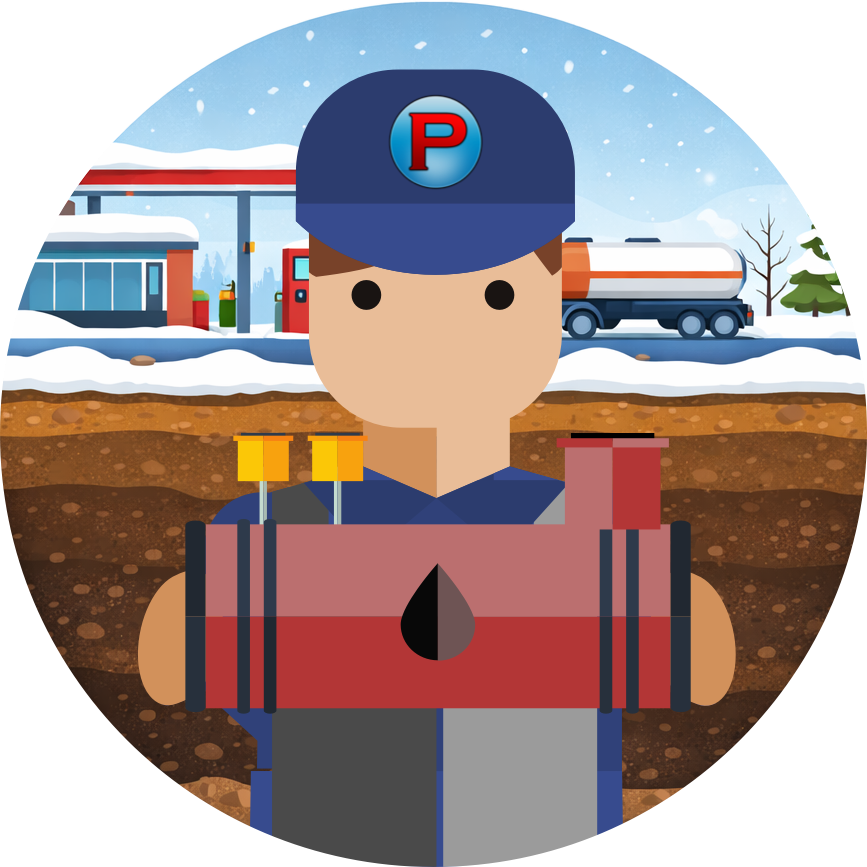
Understanding What’s Underground
Underground Storage Tank (UST) systems are easy to take for granted.
For most people, they’re completely invisible—buried beneath concrete, asphalt, and decades of routine. Fuel is delivered, dispensers run, customers come and go, and the entire system beneath the surface is rarely given a second thought. It simply works. Quietly. Reliably. Out of sight.
But for operators, technicians, inspectors, and regulators, what lies underground matters just as much as what happens above it.
Because when something goes wrong in a UST system, it often isn’t dramatic at first. It doesn’t announce itself loudly. It begins as something subtle:
A sensor that isn’t reading correctly
A sump that slowly accumulates liquid
A spill bucket that develops a hairline crack
And when compliance issues arise, they almost always trace back to a simple root cause: A lack of understanding of the system itself.
Compliance Is Always Tied to Physical Equipment
Inspection and testing requirements don’t exist in a vacuum. They aren’t arbitrary checkboxes created by regulators for the sake of paperwork. Every rule, every checklist item, every report requirement is tied directly to a physical component underground—something real, something engineered, something capable of failure.
If you don’t fully understand those components:
What they do
How they fail
What conditions regulators are looking for
…you can’t effectively inspect or maintain them. Compliance becomes mechanical instead of meaningful. And mechanical compliance is fragile.
A Modern UST System Is More Than a Tank and Pipe
A modern UST system is far more than a tank and a pipe.
Tanks may be steel or fiberglass. They may be single-walled or double-walled. Each design comes with different failure risks, different monitoring requirements, and different expectations for testing. Corrosion behaves differently than structural cracking. Interstitial monitoring introduces a different set of responsibilities than traditional leak detection.
Piping systems add another layer of complexity. Flexible piping, fittings, joints, shear valves, secondary containment—all of it must be properly installed, monitored, and tested. A single weak point in a piping run can become a long-term environmental and regulatory liability.
Spill buckets are a perfect example of how something small can carry major compliance weight. Their purpose is simple:
Protect against fuel releases during delivery
But in the field, they are exposed to constant stress:
Fuel exposure
Weather
Vibration
Physical wear
They crack. They hold liquid. They fail quietly. And if they aren’t tested properly, that failure can persist unnoticed for years.
Containment sumps are even more hidden. They house critical connections, sensors, and transition points in the system. Most operators rarely see inside them. Yet inspectors expect them to be dry, intact, and properly monitored. A sump may look fine at a glance, but sensor placement, liquid intrusion, and wall integrity tell the real story.
Then there’s the Automatic Tank Gauge (ATG)—the brain of the system. ATGs collect data constantly, but only if they are configured correctly, maintained consistently, and interpreted properly. An ATG can be “running” while still failing to meet state-specific requirements. A compliance issue isn’t always a broken device. Sometimes it’s a misunderstood one.
Why Inspections Fall Short
When inspections fall short, it’s rarely because someone didn’t care.
More often, it’s because the person performing the inspection didn’t fully understand what they were looking at—or why it mattered.
A sump may be checked visually but not evaluated for sensor performance
A spill bucket may be present but not tested for integrity
A line leak detector may be documented without confirming it actually responds under real-world conditions
An ATG may generate reports, but not the right ones
Training Is More Than a Checkbox
This is where training becomes more than a regulatory checkbox.
Effective UST training builds a mental map of the system underground. It connects each component to its compliance obligation. It explains not only what the rule is, but why it exists, what failure it is designed to prevent, and what regulators expect to see in practice.
When operators and technicians understand how components work together:
Inspections become meaningful rather than routine
Testing becomes verification rather than paperwork
Compliance becomes proactive rather than reactive
Functionality Testing Requires Understanding
Functionality testing follows the same principle.
Tests are not designed to satisfy a form. They are designed to confirm that components perform as intended under real operating conditions. Without understanding how a sensor responds to liquid intrusion or how a detector identifies a leak, a test can be performed incorrectly—or worse, documented as complete without actually confirming performance.
Knowledge gaps don’t just create compliance risk. They create environmental risk.
Closing the Training Gap
Inspections are not meant to catch people off guard. They are meant to confirm that systems are operating safely and as designed. When inspection results are unclear or inconsistent, it often reflects differences in training and understanding rather than differences in effort.
Consistent, standardized education helps close that gap.
The PASS Philosophy
At PASS, this philosophy drives how training and inspection support are built.
UST operator training focuses on the “why” behind the rules, not just the rules themselves
Inspections and functionality testing are grounded in real equipment behavior, not theoretical checklists
The goal is clarity—so operators, technicians, inspectors, and regulators are all speaking the same language
The Core Truth
As UST systems continue to age and regulations evolve, understanding becomes even more critical. Infrastructure doesn’t stand still. Failure modes change. Expectations tighten. And compliance requires more than familiarity—it requires fluency.
The better you understand what’s underground, the better prepared you are to inspect it, maintain it, and keep it compliant.
Because in UST compliance, one truth holds steady: You can’t inspect what you don’t understand.
If you’re interested in Learning more about our A/B Training and our Compliance Managment Software PASS Harmonics contact us!